Late Shri Parmeshwar Lal Rungta never ran an NGO. He never published a manifesto, never sat on a committee, never gave a speech about social responsibility. What he did was simpler and more powerful — he lived by a single conviction, and he taught it to his son.
Never lose any opportunity that comes across your life to help the poor and the underprivileged. — Late Shri Parmeshwar Lal Rungta
That sentence — simple, direct, and uncompromising — became the seed from which Abhinav Pragati Samiti grew.
The man behind the vision
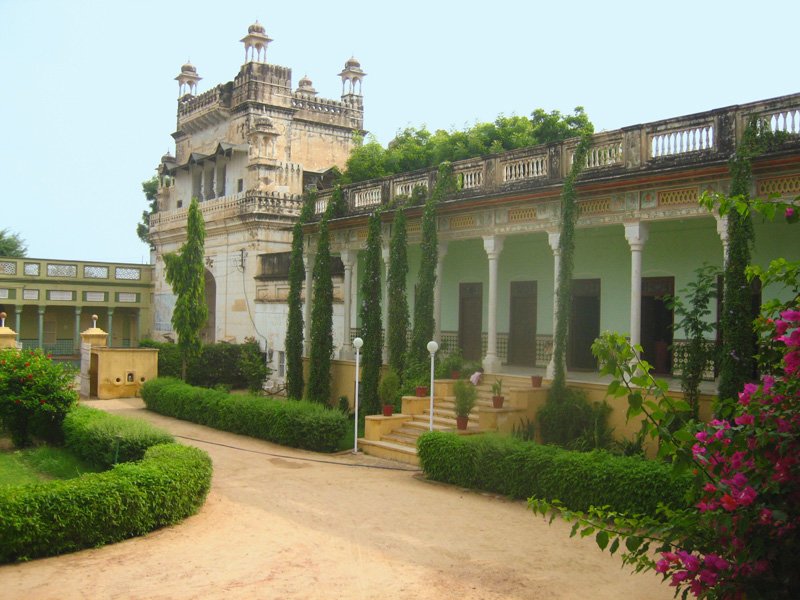
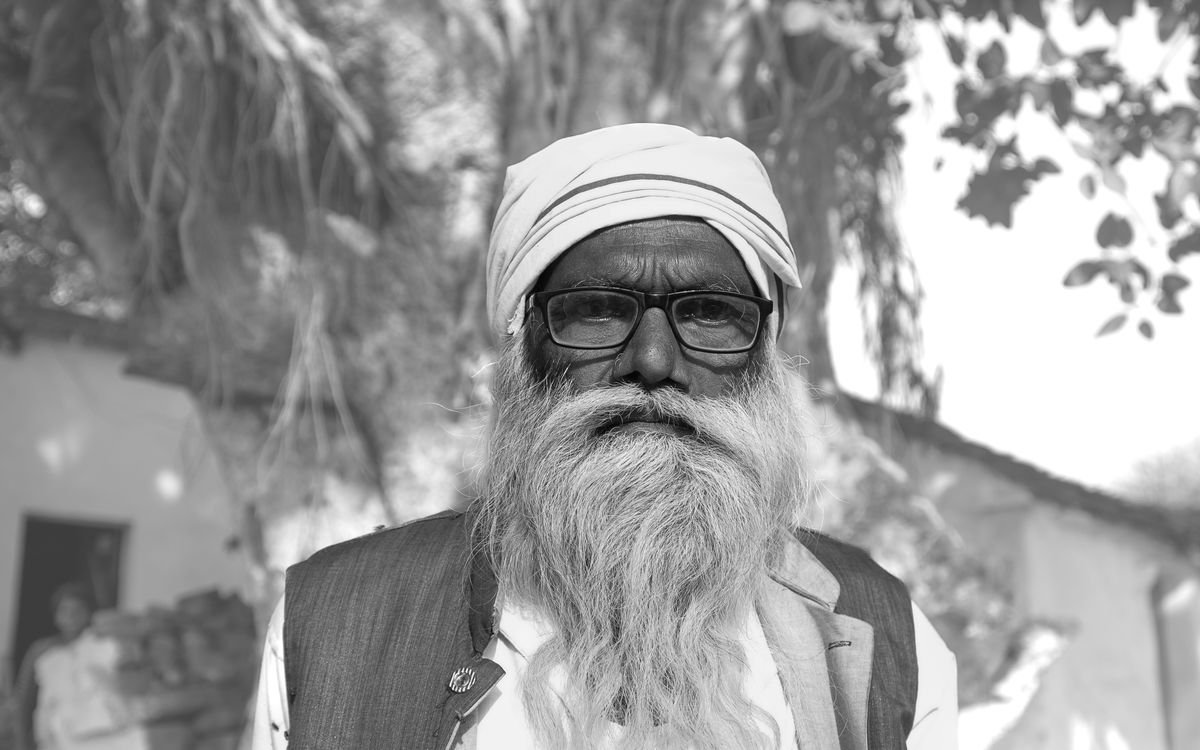
Parmeshwar Lal Rungta was a man of Bagar — born, raised, and rooted in the Shekhawati soil. He belonged to a generation that measured a person's worth not by what they accumulated but by what they gave away. In the Marwari trading community of Shekhawati, philanthropy was not a separate activity; it was woven into the fabric of daily life. You earned, and you shared. You prospered, and you ensured others around you did not go hungry.
He was not a wealthy man in the conventional sense. But he was generous in a way that left a mark on everyone who knew him. A neighbour's child needed school fees — he found the money. A labourer's family needed grain — his door was open. A stranger needed directions — he walked them there himself.
His son, Shri L.N. Rungta, watched this growing up. He absorbed not the act of giving but the instinct of giving — the reflex that says, when you see someone in need, you do not look away.
The founding moment — 5th October 1976
In 1976, Shri L.N. Rungta was a young man with a growing business and a growing sense that personal charity, while necessary, was not enough. The problems of rural Bagar — illiteracy, poverty, lack of healthcare, the subordinate position of women — were too large and too structural to be solved by individual acts of kindness, however frequent.
What was needed, he believed, was an institution. A structured, organised effort that could mobilise resources, coordinate volunteers, and sustain work over years and decades. An institution that would carry forward his father's philosophy but at scale.
On 5th October 1976, he gathered a small group of like-minded individuals in Bagar and formally established Abhinav Pragati Samiti. The name — Abhinav meaning "new" and Pragati meaning "progress" — reflected the aspiration: new progress for the people of Bagar and its surrounding rural areas.
The founding document listed broad aims: literacy, women's welfare, poverty alleviation, health care, environmental protection. These were not chosen from a textbook. They were the problems Parmeshwar Lal Rungta had spent his life responding to, one person at a time. His son was simply proposing to respond to them systematically.
The philosophy in practice
What makes Parmeshwar Lal Rungta's vision remarkable is not its uniqueness — many people believe in helping the poor — but its durability. Nearly fifty years after his passing, the institution built in his memory continues to operate on the same principle.
Every programme the Samiti runs, every camp it organises, every blanket it distributes, every scholarship it awards — all of it traces back to that single conviction. The Samiti has grown, adapted, and expanded, but the root has never changed.
There is something profound about a philosophy that does not need to be complex to be effective. Parmeshwar Lal Rungta did not leave behind a theory of development. He left behind a way of being. And that way of being, transmitted from father to son and from son to an institution, has touched tens of thousands of lives across the Shekhawati region.
The living legacy
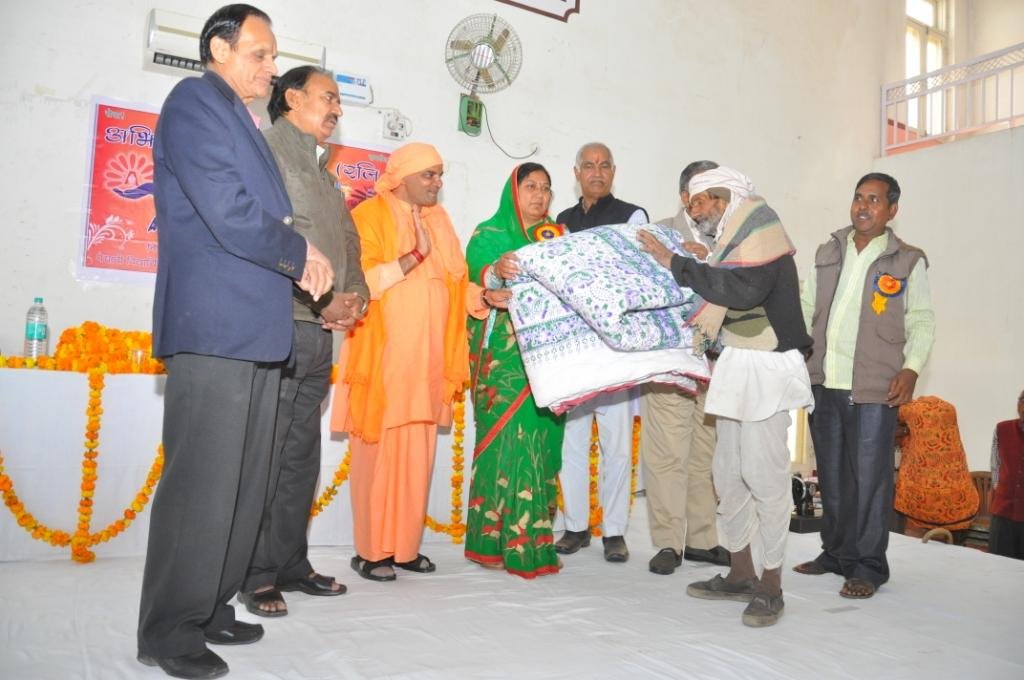
Today, when a volunteer distributes blankets in a cold January, when a doctor examines an elderly farmer's eyes at a free camp, when a young woman learns to sew and starts her own small tailoring business — they are, whether they know it or not, carrying forward a vision that began with a man who simply refused to look away from suffering.
Parmeshwar Lal Rungta's name is not on a building. It is not on a plaque. It is in the instinct — the reflex — that drives the work. And that, perhaps, is the most fitting memorial any person could have.
If you would like to be part of this continuing legacy, donate here or join us as a volunteer. Every contribution, large or small, carries forward a vision that has endured for nearly five decades.