
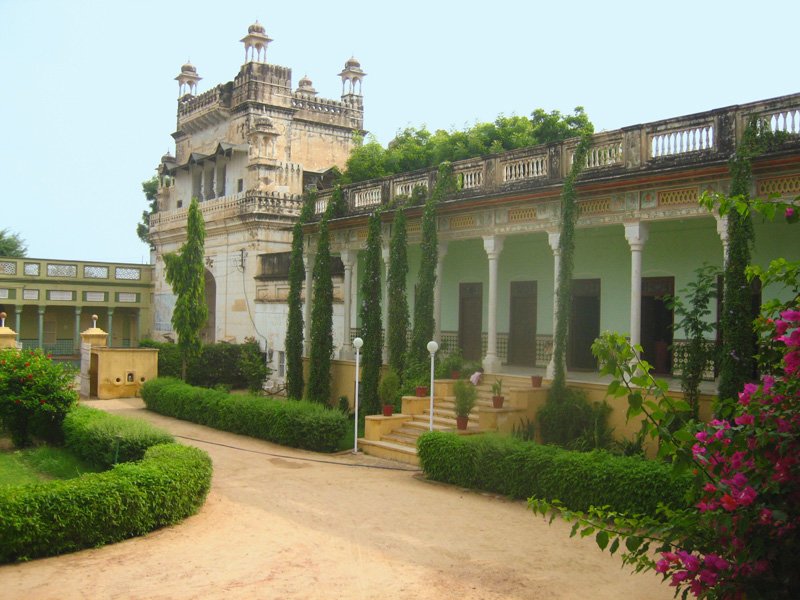
Geography
An area of Rajasthan is known as Shekhawati. The emperor of Amer, Udaikaran, had a grandson named Mokal Ji. Mokal Ji's son was Shekha, who established a separate state which, after his name, is known as Shekhawati. Jhunjhunu is a famous district situated in the Shekhawati region. Bagar is situated to the east of Jhunjhunu, 14 km away from the district headquarters.
It is written in Kayam Khan Raso that Mobat Khan Kayam Khani came to Bagar and lived here around 1446 AD. This establishes that Bagar existed before Mobat Khan Kayam Khani's arrival.
According to historical evidence, Shardul Singh Shekhawat took Bagar and Narhad from the Pathans in 1731 AD. Afterwards, his son Jorawar Singh's son Maha Singh acquired Bagar.
Bagar holds an important place in education, second only to Pilani. The Piramal, Maheshwari, Rungta and Patwari families helped Bagar become prominent in education.
Bagar is located at 28.18°N 75.50°E, with an average elevation of 315 m (1,033 ft).
Population
As per the latest census, the population of Bagar is 15,670.